
Service charges often catch diners off guard. The bill looks higher than expected, and it is not always clear what the extra fee covers or who it benefits.
These charges are not added randomly. They are a response to rising labor costs, tipping inconsistencies, and operational pressure on restaurants.
This article explains why restaurants add service charges, how they affect staff and customers, and what to keep in mind when paying or splitting the bill.
"I think they do it for transparency and to keep consistent standards for both staff and guests, but I don’t like when restaurants add service charges because it feels forced." - Martynas Baniulis
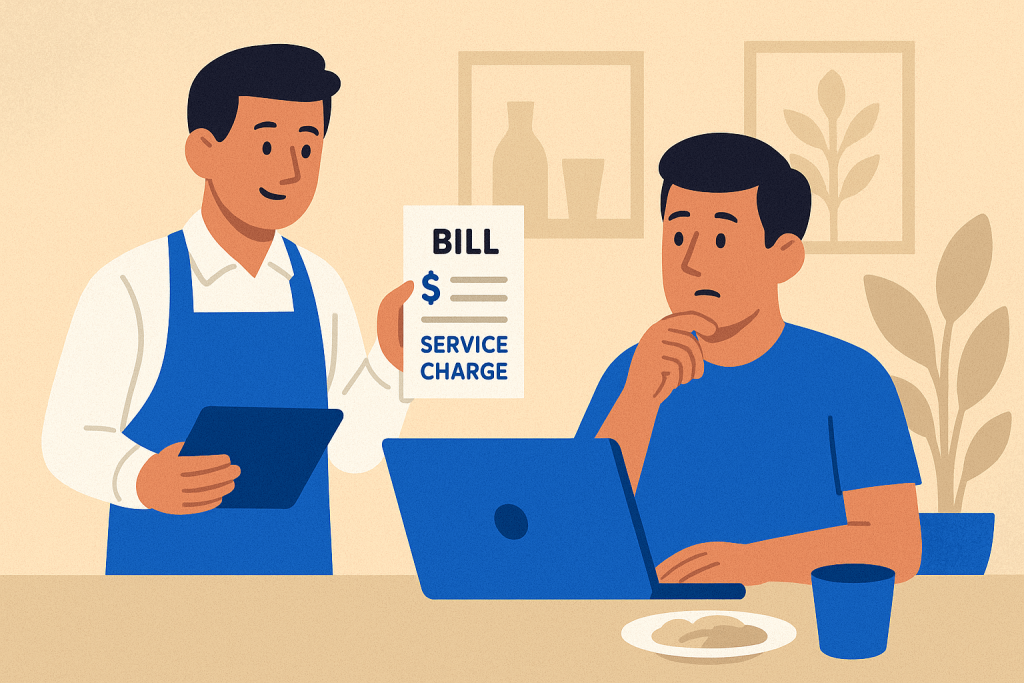
Restaurants add service charges for different reasons, and they’re not all the same. Some are meant to support staff pay, others cover operating costs, and some aim to standardize service. Understanding the intent behind them helps explain why they exist and how they affect both customers and staff.
Service charges are usually introduced to solve specific operational problems rather than to raise prices quietly. For restaurants, they offer a way to manage staffing, payroll, and group service more reliably.
Service charges help staff earn consistent income regardless of tipping habits. This matters most with large groups, where tips are often inconsistent or forgotten.
When service charges are treated as wages, payroll becomes more predictable. This reduces admin work and creates clearer pay structures.
Large parties require more coordination and time. Automatic charges account for that extra workload without relying on voluntary tipping.
These business goals show up in different types of charges on your bill. The wording matters, because it often signals where the money actually goes.
🎉 Event-Based Charges
• Private dining rooms
• Large group reservations (6+ people)
• Special events and parties
• Holiday dining
🏢 Operational Charges
• Administrative fees
• Kitchen fees
• Service fees for all tables
• Living wage initiatives
Behind these charges are real people. For staff, service charges reduce reliance on unpredictable tipping and provide more stable pay.
👥 Benefits for Staff:
• More predictable income
• Protection from poor tippers
• Fair compensation for large group service
• Reduced income volatility
• Better work-life balance planning
All of this matters because service charges change how you should read the final bill. They affect both the total cost and whether extra tipping makes sense.
💡 What to Do
Always check your bill for service charges before calculating tips. Ask your server if you’re unsure whether additional tipping is expected.
📱 When Splitting Bills
Include service charges when splitting the bill. They’re part of the total cost, unlike optional tips.

Service charges exist to create stability for restaurants and staff, even if they aren’t always clearly explained. Once you understand what they cover, they become easier to factor into the total cost of dining.
Always check whether a service charge replaces tipping or exists alongside it. Ask when unsure, especially in group situations.
Knowing why service charges exist helps you avoid overpaying, tip fairly, and handle shared bills with confidence.
🏪
Handle restaurant bills with service charges using Bill Split Pro. Include all fees for accurate group expense sharing.
Include All Charges
