

Finances are one of the most common sources of stress in a marriage. There are multiple bills, recurring expenses, and long-term goals to manage at the same time.
Without clear communication about who pays for what, small misunderstandings can turn into ongoing tension.
This article breaks down the main expense categories couples face and shows practical ways to divide them fairly.
"There’s no universal rule for who should pay for what in a marriage. What matters is clarity and agreement. Couples who define shared expenses, personal spending, and savings responsibilities early tend to avoid resentment later. The structure can vary, but transparency should not." - Martynas Baniulis
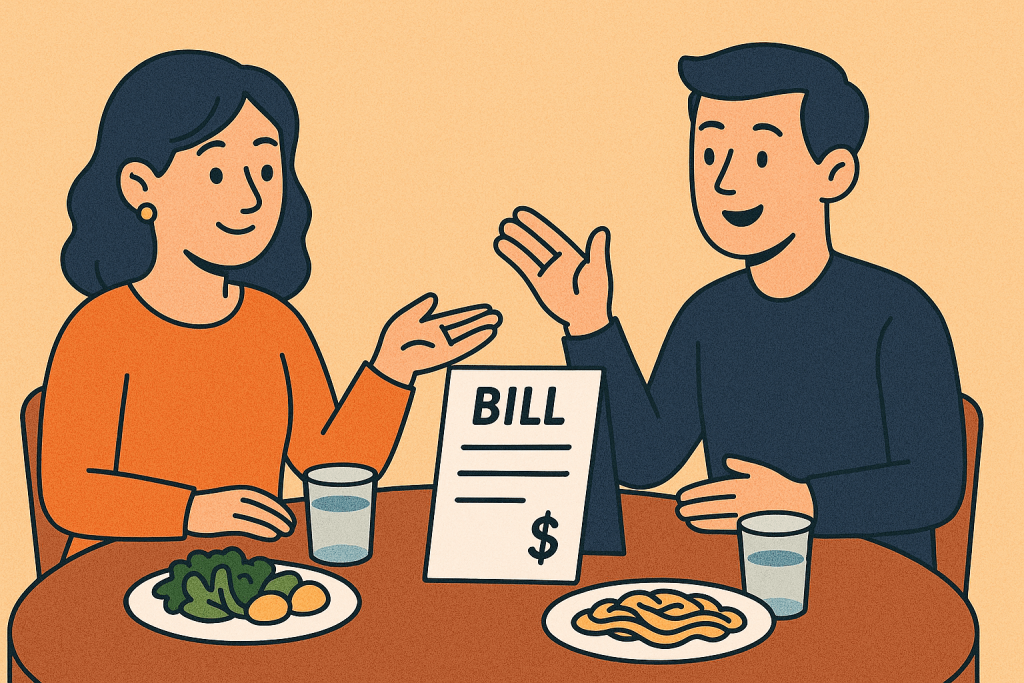
Before deciding who pays for what, identify every recurring cost in your household. Many disagreements happen because couples only focus on large bills and ignore smaller monthly charges.
✅ Shared expenses often include::
• Mortgage or rent
• Utilities
• Home and auto insurance
• Childcare
• Internet
• Streaming services
• Groceries
• Gas and transportation
• Savings goals
Review bank and credit card statements to uncover additional subscriptions or automatic payments. Once the full list is clear, you can assign responsibility logically instead of reacting month to month.
Using a bill split calculator can also help test different arrangements before committing to one.
Knowing your expenses is only the first step. The next decision is how to divide them.
Most couples use one of three basic models: equal splitting, income-based splitting, or category-based responsibility.
Housing is usually the largest shared expense. This includes rent or mortgage, utilities, internet, and often groceries.
How couples divide these costs depends heavily on income balance.
The higher earner covers the mortgage and utilities. The other partner handles internet and groceries.
Housing is split proportionately to income. For example, one partner pays 70 percent of rent while the other pays 30 percent. Utilities and groceries may be split evenly.
All housing costs are split evenly. Each partner transfers their share into a joint account used only for bills.
Whichever approach you choose, make sure both partners still have room in their budget for personal expenses and savings.
Child-related costs require special attention because they can change quickly over time.
Parents alternate paying daycare costs weekly. The non-paying parent covers snacks or incidental costs during that period.
All child-related expenses are split evenly and paid from a joint account.
One spouse covers daycare. The other handles clothing, school supplies, activities, and medical costs.
As children grow, these costs shift. Review your arrangement regularly to keep it aligned with actual needs.
Not all expenses fit neatly into housing or childcare. Subscriptions, insurance, car payments, and personal services can create confusion if not assigned clearly.
Each person pays for what they personally use. Shared services are split evenly.
All extra costs are divided proportionately based on income.
Everything is split evenly regardless of usage.
This category often benefits from periodic review. Cancel services you no longer use and adjust responsibility if habits change.
The best financial system is not the most complex one. It is the one both partners understand and accept.
• Define categories clearly
• Decide whether the split is equal or proportional
• Use a joint account for shared bills if helpful
• Revisit the arrangement when income or expenses change
Clarity prevents resentment.

There is no universal rule for who pays for what in a marriage. The right approach depends on income, priorities, and long-term goals.
What matters most is agreement and consistency. Review your expenses. Choose a structure that feels balanced. Adjust when circumstances change.
When expectations are clear, finances become a shared responsibility instead of a recurring source of stress.
💪
Handle shared expenses clearly and fairly with Bill Split Pro. Keep balances accurate and avoid confusion from the start.
Clear & Fair
