

Bachelorette parties are meant to celebrate the bride. But once travel, lodging, meals, and activities are added together, the total can grow quickly.
Many modern bachelorette parties include destination trips or full weekend plans. Without clear financial expectations, attendees can feel pressured or surprised by the final cost.
This article explains how bachelorette party expenses are usually divided and how to keep the process fair and transparent.
"At a bachelorette party, I think guests should usually cover their own travel and accommodation. Shared activities can be split between attendees, especially if everyone agreed to them in advance. The bride typically shouldn’t be paying for her own celebration unless that was clearly discussed beforehand." - Martynas Baniulis

Deposits often lock in costs before everyone fully understands what they are committing to. That is where most problems begin.
✅Before reservations are made, the group should agree on:
• The estimated total cost per person
• What is included in shared expenses
• What is paid individually
• Whether the bride’s portion will be split
If someone cannot afford the plan, it is better to adjust early than to create tension later.
The maid of honor typically organizes the event. That includes choosing dates, booking accommodations, planning activities, and coordinating payments.
She may front deposits, but she is not expected to personally fund the party.
Her responsibilities usually include:
• Communicating estimated costs clearly
• Collecting money before major bookings
• Updating the group if costs change
• Adjusting totals if someone backs out
Planning the party does not mean absorbing the financial risk.
In most cases, attendees split shared costs evenly. The bride’s portion is often divided among the group.
Shared costs typically include:
• Hotel or rental accommodations
• Decorations
• Planned activities
• Group meals and drinks
• Local transportation
Travel to the destination – such as flights or long-distance gas – is usually paid individually and not included in the shared total.
Optional activities should only be split by those participating.
Traditionally, the bride does not pay for shared portions of the bachelorette party. Her lodging, group meals, and planned activities are usually covered by attendees.
She may still pay for:
• Her travel to the destination
• Personal shopping
• Optional add-ons
Since many brides are involved in planning, they often help shape a budget that works for the group.
Sometimes people who are not attending want to contribute financially. This may include the groom or family members.
These contributions might cover:
• The bride’s portion
• A specific dinner or activity
• Travel costs
• Upgrades or special surprises
If someone contributes, clarify how the money will be allocated before adjusting the split.
Contributions are gifts, not obligations.
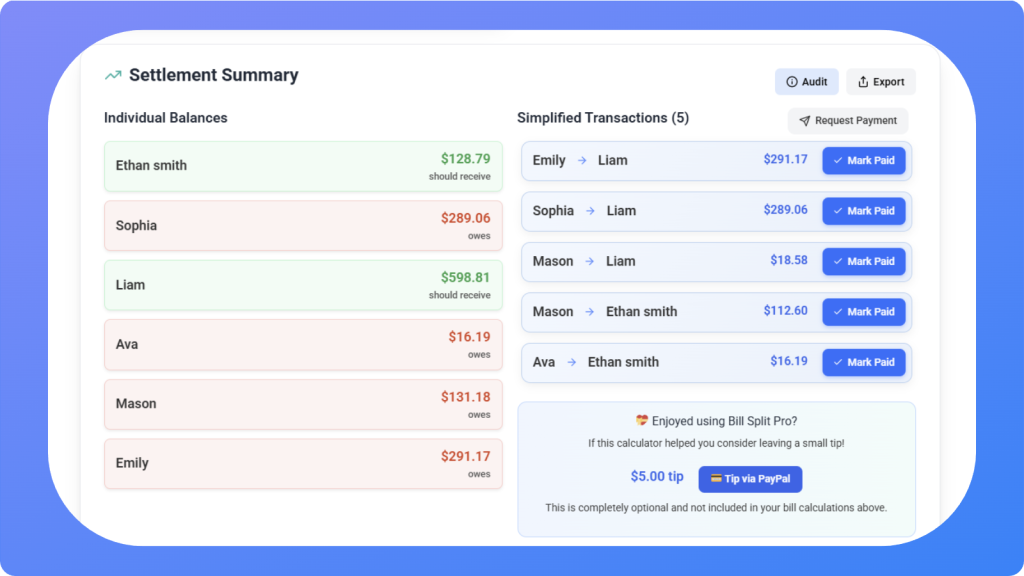
Bachelorette planning can involve multiple payments across weeks or months. Without tracking, it becomes difficult to know who has paid what.
Using a bill split calculator can help track deposits, shared costs, and reimbursements. This protects the organizer from covering extra expenses and keeps everyone aligned.
Visibility prevents misunderstandings.

Bachelorette party costs are typically split evenly among attendees and often include the bride’s share. The maid of honor plans the event but is not expected to pay for it alone.
Clear expectations matter more than tradition. Confirm budgets before booking. Allow people to decline without pressure.
A clear plan keeps the focus on celebration, not financial stress.
💪
Handle shared expenses clearly and fairly with Bill Split Pro. Keep balances accurate and avoid confusion from the start.
Clear & Fair
