

A 50/50 split sounds fair on paper, but fairness depends on context. What works for one expense can feel wrong for another.
Problems usually start when the same rule is applied everywhere without thinking about income, usage, or participation. A better approach is choosing the method that fits the situation.
This article explains when equal splitting makes sense and when another method is the smarter choice.
"I think 50-50 works best when everyone receives the same thing and has similar financial situations. If usage, space, or income differs a lot, sticking to equal numbers can feel unfair. In those cases, adjusting the split makes more sense than forcing symmetry." - Martynas Baniulis
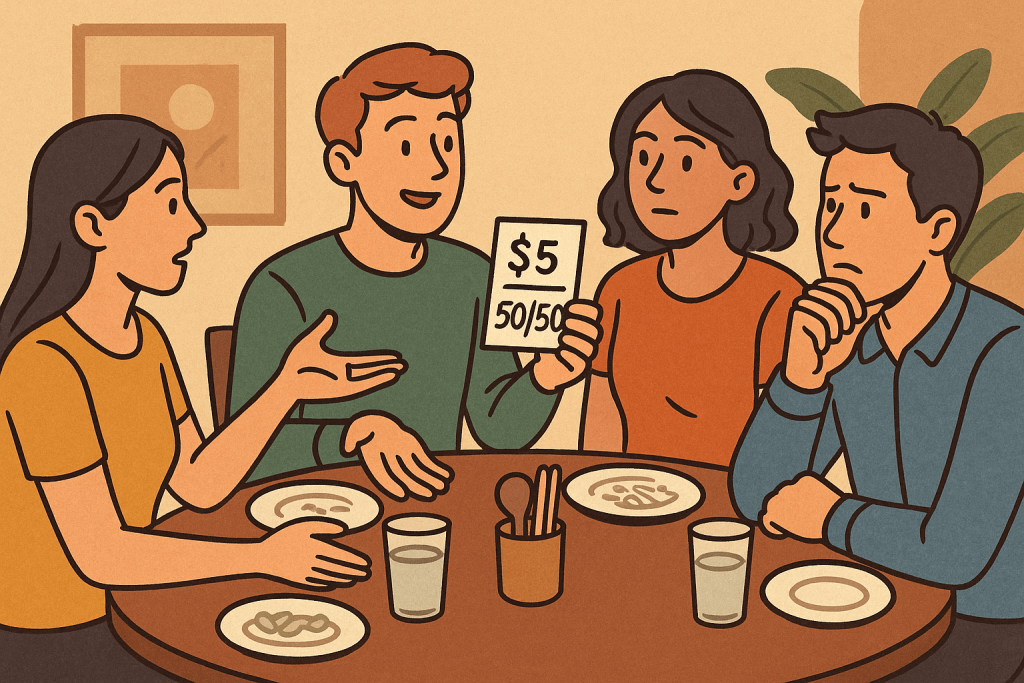
Equal splitting works when benefit and usage are clearly the same. In these situations, dividing the cost evenly feels natural and avoids unnecessary calculations.
✅ 50/50 Works Best For:
🍽️ Group Dining
When everyone orders similar-priced items and shares food or drinks evenly.
🏠 Shared Accommodation
Hotel rooms, vacation rentals, or camping fees where space and benefit are similar.
🎬 Entertainment
Movie tickets, concerts, or events where everyone receives the same experience.
🚗 Transportation
Rideshares, gas, or parking fees when everyone travels together on the same route.
In these cases, simplicity supports fairness.
Equal splitting becomes unfair when contribution, usage, or benefit clearly differs.
❌ Avoid 50/50 Splitting When:
💸 Income Differences Are Large
When equal payments create strain for one person.
🍷 Consumption Varies Widely
When some people order significantly more or choose premium items.
🏡 Usage Can Be Measured
Utility bills, phone plans, or services where one person clearly uses more.
🎯 Participation Is Optional
When not everyone joins an activity or agrees to the expense.
Applying equal splits in these situations often leads to quiet resentment.
When equal sharing does not fit, choose a method that reflects reality.
📊 Proportional by Income
Costs are divided based on earning capacity.
Example: If one person earns 60% of the combined income, they contribute 60% of shared costs.
This works best for long-term or recurring shared expenses.
📏 Proportional by Usage
Costs reflect actual consumption or measurable benefit.
Example: Electricity split by room size or usage pattern.
This method works well when data is clear and agreed upon.
👥 Participant-Based
Only those who participated share the cost.
Example: Optional tour fees split only among those who joined.
This keeps voluntary activities from becoming forced expenses.
The right choice depends on the expense, not the habit. Matching the split to the situation prevents friction later.
🎯 Quick Decision Framework:
Does everyone benefit equally? → Consider 50/50
Are there significant usage differences? → Consider usage-based
Are there major income disparities? → Consider income-based
Did everyone choose to participate? → Consider participant-based
Is simplicity most important? → Default to 50/50
Using a simple bill split calculator helps test different methods quickly and keeps discussions focused on logic instead of emotion.

Fair bill splitting is about matching the method to the expense. Equal splits work when benefits are equal. Alternatives matter when they are not.
Think about who benefits, who uses more, and who can comfortably afford the cost. Agree before money is spent.
Clear logic prevents tension and keeps shared expenses balanced.
🎯
Bill Split Pro supports any splitting method you choose. Create fair, transparent expense sharing that works for your group.
Flexible & Fair
