

Cleaning a shared home is about more than effort. Supplies cost money. Professional help adds another layer. Without clear rules, small cleaning expenses can turn into ongoing frustration.
Fair splitting keeps things simple. It also prevents arguments over who paid last or who cleans more. The right setup depends on how the household uses the space.
This article focuses on practical ways to split cleaning costs while keeping the household running smoothly.
"For household cleaning, I think costs should reflect who uses the service and how often. If everyone benefits equally, splitting the cost makes sense. If one person wants extra cleaning or uses the space more, adjusting the split avoids resentment later." - Martynas Baniulis
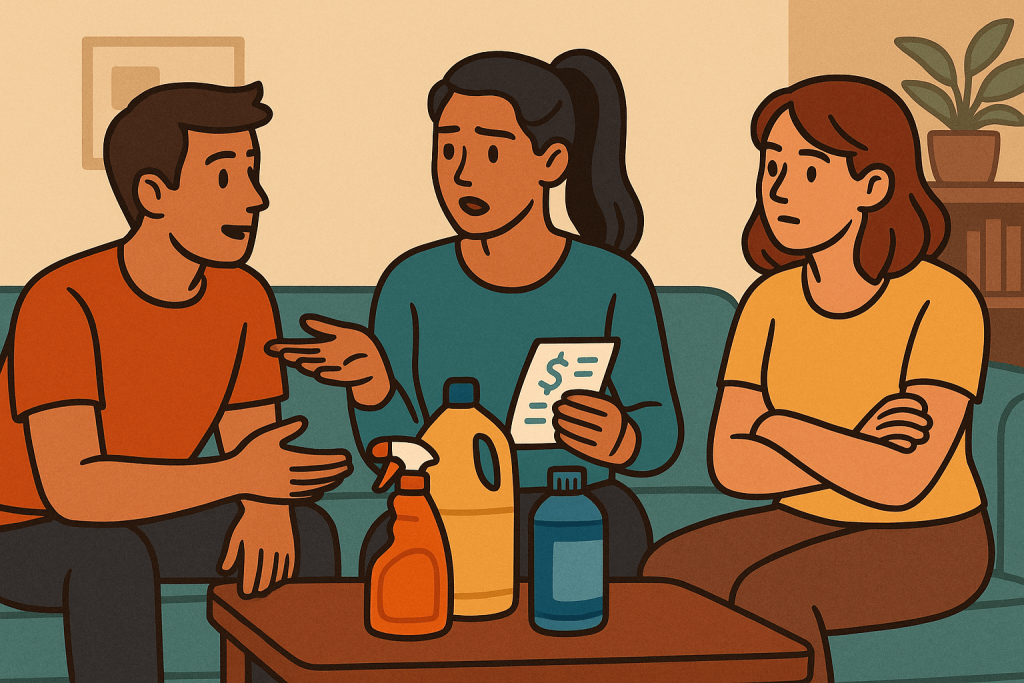
Cleaning expenses tend to fall into two categories. Ongoing small purchases like supplies, and larger service-based costs like professional cleaners. Problems start when one is treated as shared and the other is not.
Before deciding how to split, define what counts as a shared cost and what stays personal. Once that is clear, the split becomes easier to agree on.
🧽 Cleaning Supplies
• All-purpose cleaners
• Toilet paper and paper towels
• Dish soap and sponges
• Vacuum bags and filters
• Trash bags and recycling bins
These are recurring essentials. Most households treat them as shared because everyone benefits from them daily.
🏠 Professional Services
• Weekly or monthly cleaning service
• Deep cleaning sessions
• Carpet cleaning
• Window cleaning
• Move-out cleaning
These costs are larger and usually planned. Agreement is critical before booking any service.
The method should match how the home is used and how responsibilities are shared.
Example: $120 monthly cleaning service ÷ 3 roommates = $40 each
Equal splitting works well when room sizes and daily habits are roughly similar.
Consider when: One roommate works from home while others are rarely there.
Usage-based splitting prevents one person from quietly covering more than their share.
Create a system that balances cost sharing with cleaning responsibilities. Some roommates prefer to pay more rather than clean, while others prefer to clean rather than pay.
💡 Pro Tips:
• Buy supplies in bulk to reduce per-unit costs
• Rotate who buys supplies each month
• Keep receipts for shared cleaning expenses
• Consider cleaning service as an investment in harmony
Tracking shared cleaning costs in a simple bill split calculator keeps totals visible and avoids “who paid last” confusion. Everyone sees the same numbers, and balances stay clear.
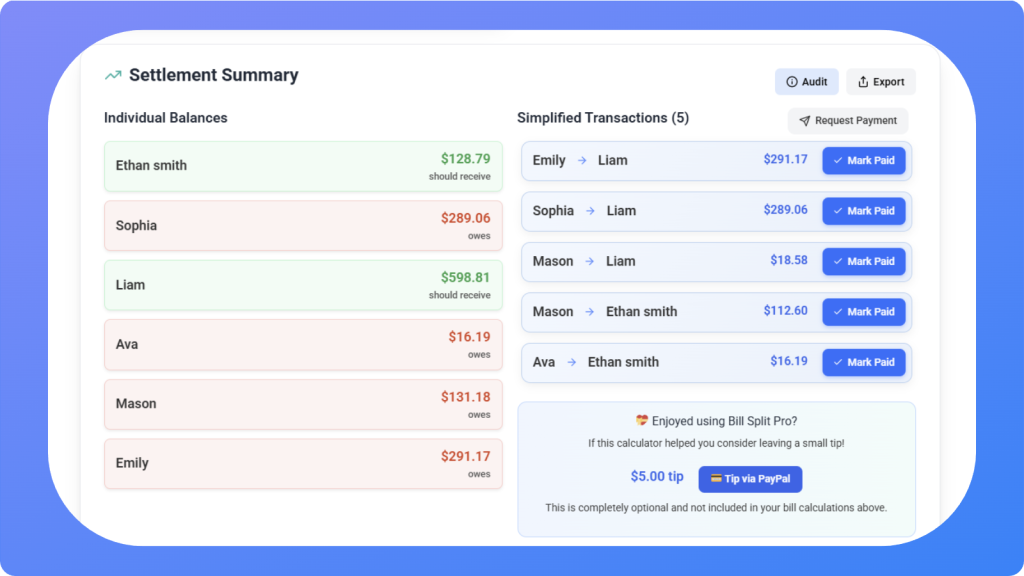
Money is only one part of the equation. Cleaning effort also matters.
If one roommate contributes more labor, that can justify equal cost sharing. If someone prefers to avoid cleaning entirely, paying a slightly larger share may feel reasonable.
The goal is balance, not perfection.

Household cleaning works best when money and effort are balanced. Equal splits are simple. Adjustments make sense when usage differs.
Agree on the approach early. Revisit it if living situations change. Keep expectations clear for both costs and responsibilities.
Most cleaning disputes come from imbalance, not laziness. A fair system keeps the home clean and relationships intact.
🧽
Track cleaning expenses transparently with Bill Split Pro. Maintain a clean home and happy roommates.
