
Birthday dinners mix celebration with money, which is why they often feel awkward. One person expects to be treated. Another assumes everyone pays. The mismatch usually appears when the check arrives.
There is no single correct rule. What matters is how the dinner was planned and what the group expects.
This article explains common birthday dinner payment approaches and how to handle them without putting anyone on the spot.
"If I invite everyone to a birthday dinner, I believe I should pay for it. That feels fair. If it’s a surprise dinner, splitting the bill makes more sense, unless I can afford to cover everyone." - Martynas Baniulis
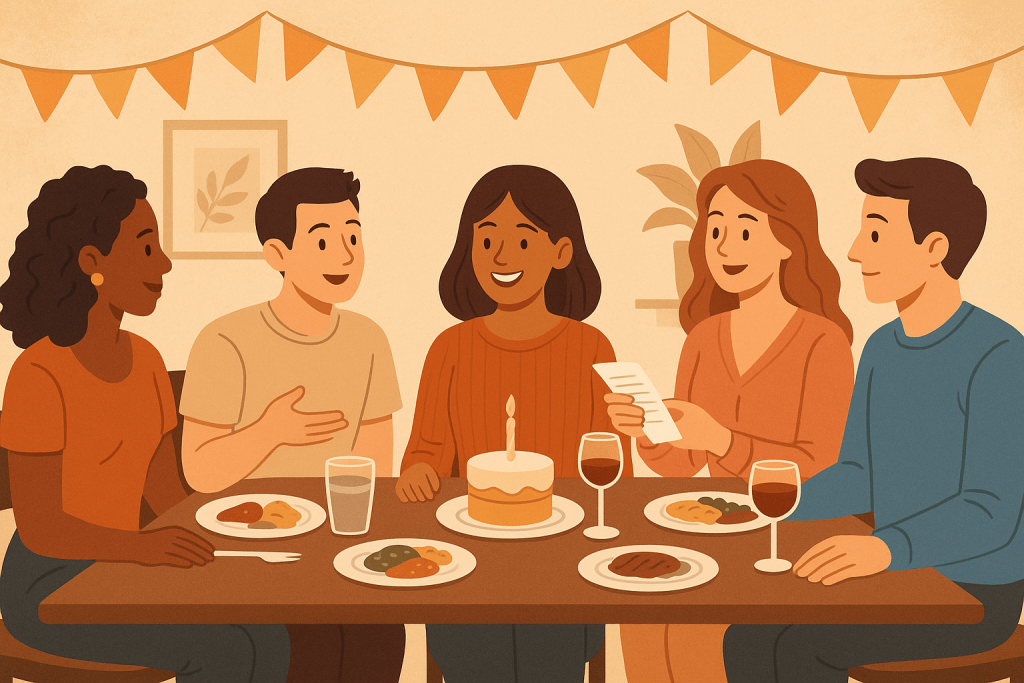
Birthday dinners are usually handled in one of three ways. Some groups fully treat the birthday person, others split the bill evenly, and many land somewhere in between. Which approach feels right depends on how the dinner was planned, who organized it, and how close the group is.
Which approach feels right depends on the situation. Most birthday dinners end up following one of these three patterns.
Traditionally, the birthday person doesn’t pay for their own birthday dinner. Friends and family cover the cost as a gift and celebration.
🎂 When Birthday Person Doesn’t Pay:
• Close friends or family organizing the celebration
• The dinner is intended as a gift
• Birthday person didn’t choose the restaurant
• Group specifically wants to treat them
• It’s a milestone birthday (21st, 30th, 50th, etc.)
In many modern friend groups, everyone pays their own way, including the birthday person. This approach works well for casual celebrations and regular dining groups.
🤝 When Everyone Pays (Including Birthday Person):
• Casual friend groups with regular dining
• Birthday person chose the restaurant
• Group prefers equal financial responsibility
• Birthday person specifically requests to pay their share
• Large groups where covering one person is expensive
Hybrid approaches offer flexibility when neither fully treating the birthday person nor splitting evenly feels right. They work well when budgets differ or when the group wants to acknowledge the occasion without overcomplicating the bill.
Split the birthday person’s meal among others, but they pay for their own drinks or extras.
Birthday person pays for their meal, others cover birthday dessert and celebratory drinks.
The most important part of birthday dinner planning is setting payment expectations early. Discuss payment arrangements when planning the celebration to avoid awkward moments.
💬 Planning Conversation Starters:
• “We’d love to treat you for your birthday!”
• “Should we all split this evenly including you?”
• “How do you usually handle birthday dinners?”
• “We’re planning to cover your meal as our gift.”
Group size often influences what feels fair and comfortable. In larger groups, covering the birthday person’s meal usually adds only a small amount to each person’s share, making it an easy choice.
In smaller groups, the cost difference is more noticeable. In those cases, partial coverage or hybrid approaches often feel more balanced, especially if the restaurant is expensive.
Thinking about group size ahead of time helps set realistic expectations and avoids putting pressure on anyone when the bill arrives.
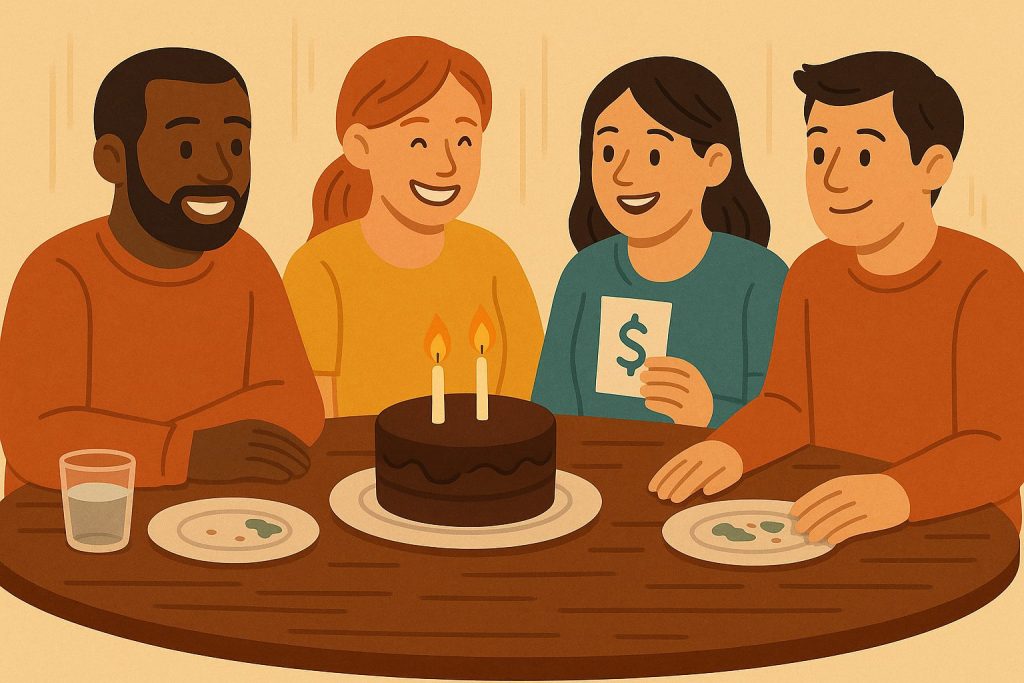
Birthday dinner etiquette works best when expectations are clear before the meal starts. The goal is to celebrate, not to debate payments at the table.
Covering the birthday person makes sense in close or planned celebrations. Equal splits work better for casual or large groups.
A short conversation during planning avoids awkward moments later and keeps the focus where it belongs- on the celebration.
🎂
Handle birthday dinner costs fairly with Bill Split Pro. Whether treating or splitting, make celebrations about joy, not money stress.
