
Weddings bring families together, but they also introduce shared financial pressure. When cost expectations stay vague, small disagreements can become personal very quickly.
Some families follow tradition. Others split costs based on income, guest count, or comfort level. There is no single correct formula. What matters is clarity and agreement before any deposits are paid.
This article explains how wedding expenses are usually split between families and how to choose an approach that avoids conflict during planning.
"We paid for our wedding ourselves with my wife. We worked our ass off to do it, but it was worth it. For us, that was the best option. In general, wedding costs should be discussed early. Splits should reflect who wants what, who can afford it, and avoid creating pressure on either family." - Martynas Baniulis

Most wedding money issues come from assumptions. Families expect certain roles to apply without ever saying them out loud, while couples assume flexibility that others may not share.
In practice, wedding costs are handled in a few common ways. Some follow tradition. Others adjust based on finances, guest lists, or comfort level. Understanding these patterns makes it easier to choose what fits your situation.
Wedding cost sharing has shifted over time. Understanding both models helps families align expectations early.
🏛️ Traditional Approach
This approach follows long-standing customs with clearly defined responsibilities.
•Bride’s family covers the ceremony and reception
•Groom’s family hosts the rehearsal dinner
•The couple pays for the honeymoon
This works when everyone agrees on tradition. Problems arise when expectations are assumed rather than discussed.
💫 Modern Approach
Modern weddings often adjust costs based on finances and comfort level.
• Costs split based on income or ability
• The couple covers a large portion
• Families contribute to major expenses
This approach fits diverse financial situations but requires more communication.
Once expectations are clear, families usually choose one of a few practical splitting methods.
Both families contribute equally to shared wedding expenses.
Best for: This works best when finances and guest counts are similar. It can feel unfair if one side invites far more guests or has a much larger budget.
Costs are divided based on how many guests each family invites.
Example: This method feels logical for reception-related expenses like catering and venue size. It becomes complicated if guest lists change late in planning.
Each family contributes based on what they can comfortably afford.
Best for: This approach reduces pressure on lower-income families. It requires honesty and mutual respect to work well.
Some families prefer dividing responsibility by expense type rather than percentages.
• Venue and catering split between families
• Photography paid by the couple
• Flowers handled by one family
• Music or DJ covered by the other
• Rehearsal dinner hosted separately
This gives families clear ownership and avoids constant cost discussions.
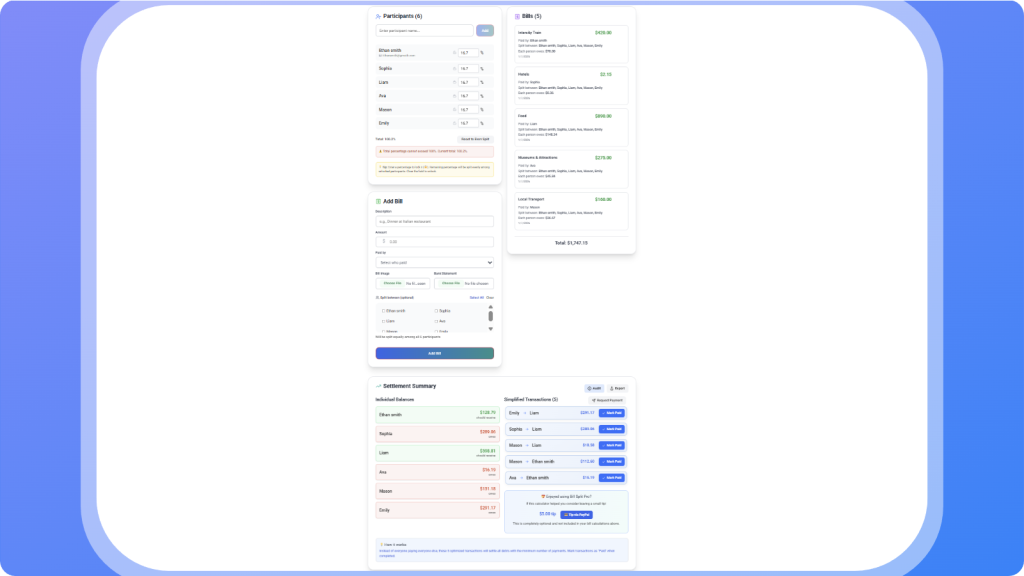
Clear communication matters more than the specific split method. Families often assume expectations are understood, but wedding costs expose differences quickly. Talking about budgets early helps set limits and prevents people from committing to expenses they are not comfortable covering later.
Define contribution boundaries upfront. Agree on who approves added costs, how upgrades are handled, and what happens if plans change mid-way. When these decisions are delayed, they usually surface during stressful moments, which makes even small disagreements feel personal.
Wedding planning stretches over months, not days. Payments happen at different times, by different people, and often across multiple vendors. Without a shared view of expenses, people forget what they paid or assume someone else covered a bill.
Using a shared bill splitting system to track wedding expenses keeps everything visible in one place. Seeing who paid what and how costs are split reduces follow-up conversations, avoids awkward reminders, and protects relationships long after the wedding is over

Wedding expense splits work best when expectations are agreed on before money is spent.
There is no perfect formula. Fairness depends on family dynamics, finances, and involvement levels.
Clear agreements, written plans, and open conversations keep the focus on celebrating the wedding instead of arguing about costs.
💒
Track wedding expenses transparently with Bill Split Pro. Keep families informed and costs fair.
Fair & Transparent
