
Road trips come with shared memories and shared costs. Gas, tolls, parking, and car-related expenses add up quickly, especially once routes or travel plans start to differ.
What feels fair depends on how the group travels. One car versus several makes a difference. So does sticking to the same route versus taking side trips. Clear rules prevent awkward conversations after the trip.
This article explains how gas and toll costs are usually handled on road trips and how to split them in a way that makes sense for everyone.
"For road trips, I think gas and toll costs should be shared by everyone in the car. If all passengers benefit from the trip, splitting those costs equally feels fair and keeps things simple." - Martynas Baniulis
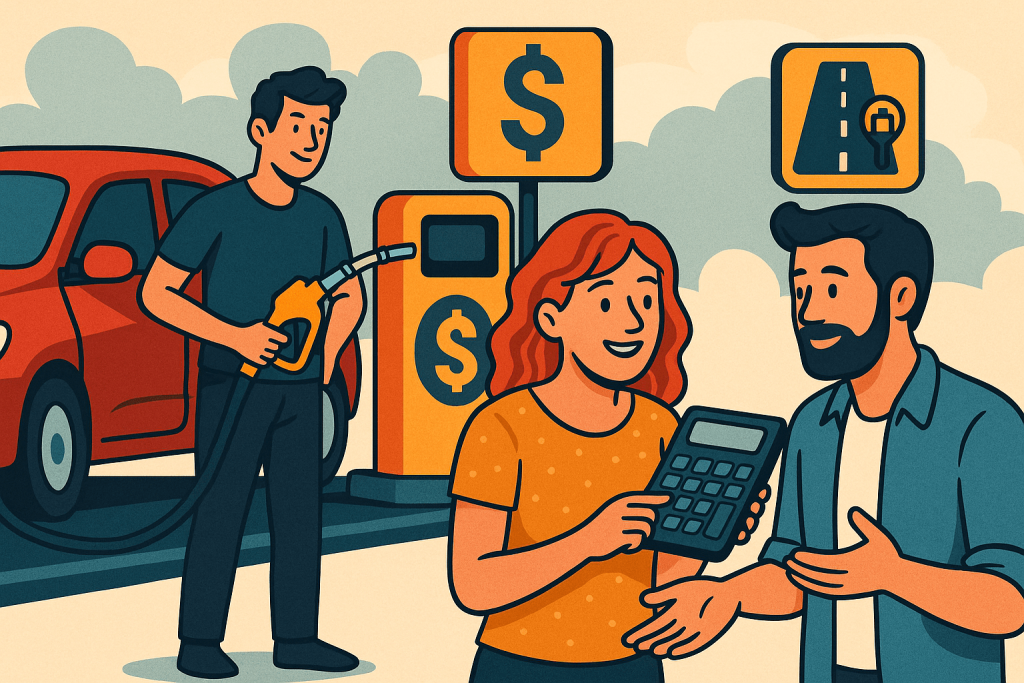
Most road trip money issues come from assumptions. People expect costs to be split evenly without considering who drove, who rode, or who took extra trips.
There are two common ways groups handle these costs. One focuses on simplicity. The other adjusts for usage and participation.
🟰 Equal Splitting
Equal splitting means everyone pays the same amount, regardless of who owns the car or who drove.
This approach works best when the group travels together for the entire trip and uses the same route.
✓ Everyone pays an equal share
✓ No tracking beyond total costs
✓ Works well for single-car trips
✓ Keeps planning simple
Problems appear when someone drives extra miles or covers costs others do not benefit from.
📊 Usage-Based Splitting
Usage-based splitting adjusts costs based on how much each person actually participates.
This method makes sense when travel distances differ or when not everyone rides together the whole time.
✓ Costs reflect actual participation
✓ Fair for side trips or partial travel
✓ Can factor in car wear and fuel use
✓ More complex to calculate
The downside is added tracking. If nobody wants to track details, this method can create friction instead of fairness.
Before choosing a split method, it helps to define which expenses belong in the shared pool.
⛽ Costs Usually Shared:
These expenses support the main trip and benefit the group as a whole.
• Gas for the main route
• Toll road charges
• Parking fees at destinations
• Car rental costs (if applicable)
• Basic car maintenance for long trips
Leaving these undefined often leads to disagreements after the trip ends.
👤 Costs Often Individual:
Some costs are personal and should not be split unless agreed on.
• Personal detours or side trips
• Premium gas upgrades
• Car washes and detailing
• Traffic violations or tickets
• Personal snacks and drinks for the car
Keeping these separate avoids resentment over optional spending.
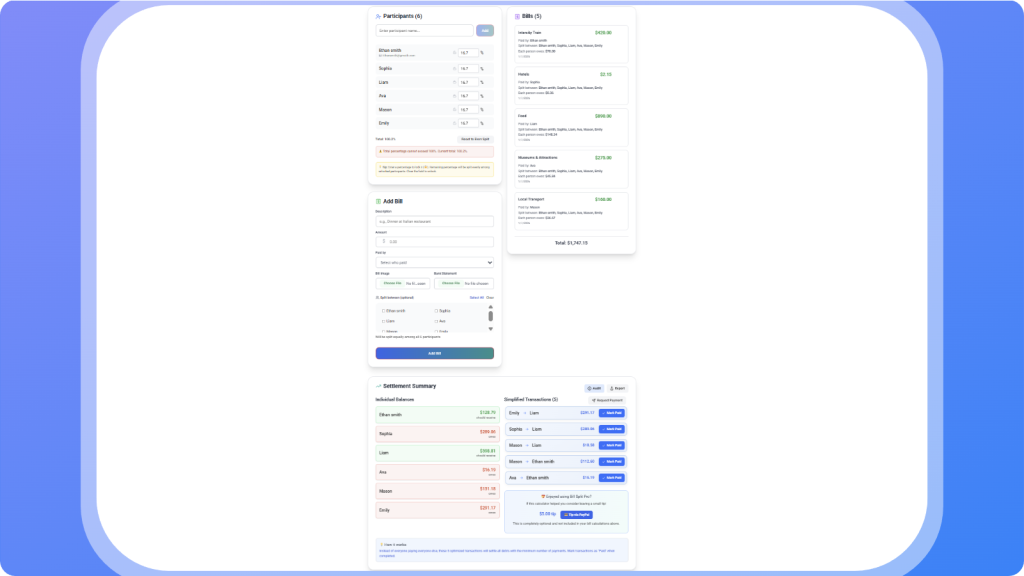
Using more than one car adds complexity. Costs should reflect how the group is actually traveling.
Decide upfront whether costs are tracked per car or pooled together. Passenger distribution and fuel efficiency matter more than ownership.
🚗 Multi-Car Strategies:
• Track gas and tolls per vehicle
• Decide if totals are split per person or per car
• Account for uneven passenger loads
• Avoid averaging costs blindly
For longer trips, tracking expenses in one place, such as a simple bill split calculator, keeps everyone aligned without repeated conversations.
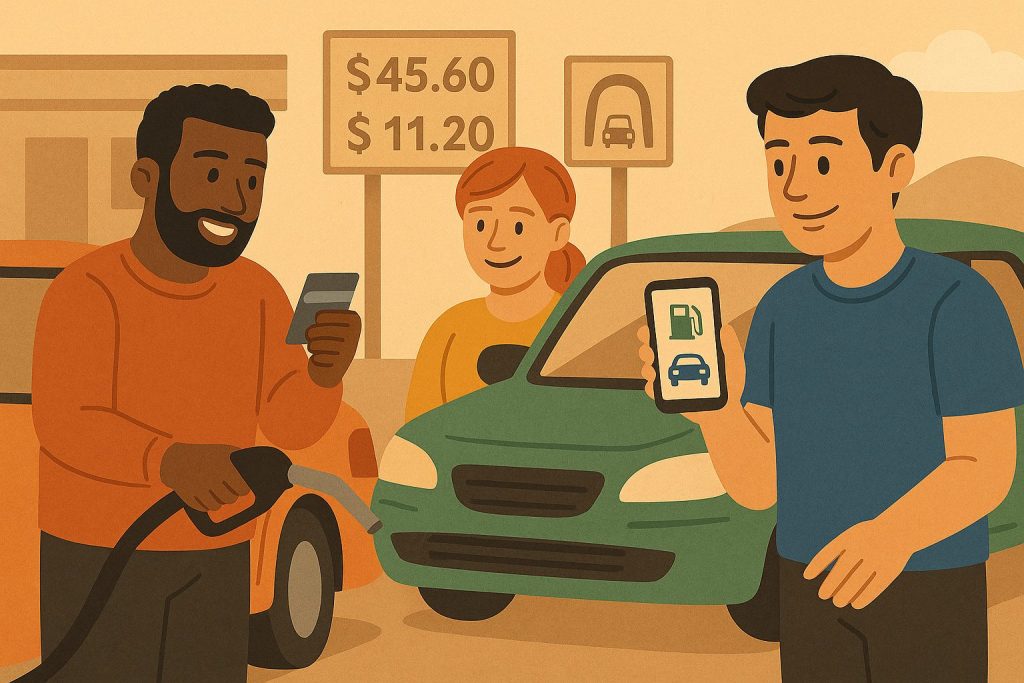
Fair gas and toll splits depend on participation, not assumptions.
Equal splits work when everyone travels together. Adjustments make sense once routes, cars, or distances differ.
Agree on the method before leaving. Clear expectations keep the focus on the trip itself, not the money.
🚗
Track road trip expenses transparently with Bill Split Pro. Focus on the journey, not the math.
