

Sharing child-related expenses after divorce requires structure and clarity. Without it, even routine costs can turn into ongoing conflict.
Clear rules help both parents stay focused on what matters most. Children benefit when expenses are predictable, fair, and handled without constant discussion or tension.
This article explains how child expenses are usually handled after divorce and how to split and track them in a way that supports long-term cooperation.
"I have children, and I honestly can’t imagine how difficult it would be to handle everything separately after a breakup. If that ever happened, I’d advocate for a 50-50 split on everything because that feels fair. If I could afford to pay more, I wouldn’t mind doing that either, because the priority would still be what’s best for the children and the family overall." - Martynas Baniulis

Most problems do not come from the expenses themselves. They come from vague agreements. Parents agree to “split costs” but never define which expenses count, how payments are handled, or how reimbursements work.
Over time, one parent pays more upfront. The other reimburses late or inconsistently. Categories blur. Small issues pile up. Clear definitions and systems prevent this from happening.
Expense decisions should support stability for the child, not convenience for adults. Predictable systems reduce stress and limit conflict.
🎯 Core Principles to Follow:
• Children’s needs come before adult convenience
• Transparency reduces suspicion and arguments
• Consistent systems create predictability
• Written records protect both parents
• Flexibility allows adjustments as circumstances change
When these principles are followed, expense discussions stay practical instead of emotional.
Grouping expenses avoids constant debate about what should be shared.
📚 Education & Development
• School tuition and fees
• Books and school supplies
• Tutoring and educational support
• Extracurricular activities
• Music lessons, sports, clubs
🏥 Healthcare & Wellness
• Medical appointments and treatments
• Prescription medications
• Dental and orthodontic care
• Mental health support
• Health insurance premiums
👕 Daily Needs
• Clothing and shoes
• Personal care items
• Food and groceries
• Transportation costs
• Technology and devices
🎯 Special Circumstances
• Emergency medical expenses
• Special needs support
• Travel for visitation
• Summer camps and programs
• College preparation costs
Defining these categories early prevents repeated disputes.
Both parents contribute equally to all child-related expenses.
Best for: Parents with similar incomes who want simplicity and equal responsibility. This reflects financial reality and reduces imbalance.
Expenses are divided based on each parent’s share of total income.
Example: If one parent earns 70% of combined income, they cover 70% of shared expenses.
Expenses are split based on parenting time or daily responsibility. This works best when custody schedules are stable and clear.
Example: A parent with 60% custody covers 60% of recurring costs like food or transport.
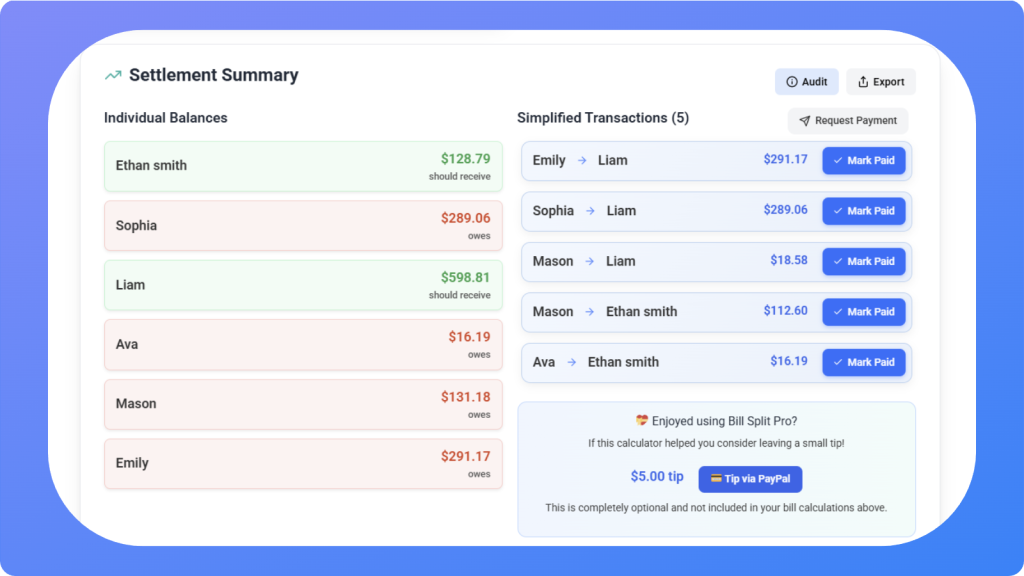
Clear records prevent arguments from resurfacing months later.
📋 Documentation Best Practices:
• Keep all receipts for child-related purchases
• Use shared tracking tools both parents can access
• Photograph receipts immediately for backup
• Categorize expenses for easy review
• Set regular settlement periods (monthly/quarterly)
• Maintain records for tax and legal purposes
Tracking everything in one shared place, such as a simple bill split calculator, keeps balances visible and removes guesswork.
Disagreements will happen even with good systems. Planning for them limits damage.
💬 Communication Guidelines
Discuss larger expenses before spending whenever possible. For emergencies, communicate as soon as practical and share documentation afterward.
💰 Spending Limits
Set thresholds that require joint approval. For example, any expense over an agreed amount needs consent from both parents.
⚖️ Dispute Resolution
Agree in advance how disputes are handled, whether through mediation, legal guidelines, or another defined process. Clear escalation paths prevent repeated arguments.

Managing child expenses after divorce works best with clear rules and consistent tracking.
Fair splits depend on income, custody, and agreed responsibilities, not assumptions.
When expectations are defined early, parents spend less time arguing about money and more time supporting their children.
👨👩👧👦
Track child expenses transparently with Bill Split Pro. Maintain focus on your children's wellbeing with fair, documented expense sharing.
