
Shared trees can be a benefit and a problem at the same time. Shade, privacy, and property value are positives. Maintenance, damage, and safety concerns are not.
Most disputes start because responsibility is unclear. One neighbor assumes costs are shared. The other assumes they are not. That gap is where tension forms.
This article explains how shared tree care is usually handled and how to split costs fairly without damaging neighbor relationships.
"When sharing tree care costs with a neighbor, I think ownership matters first. If the tree is mine, I pay. If it’s theirs, they should pay. If the tree sits between properties and affects both sides, splitting the cost makes sense." - Martynas Baniulis
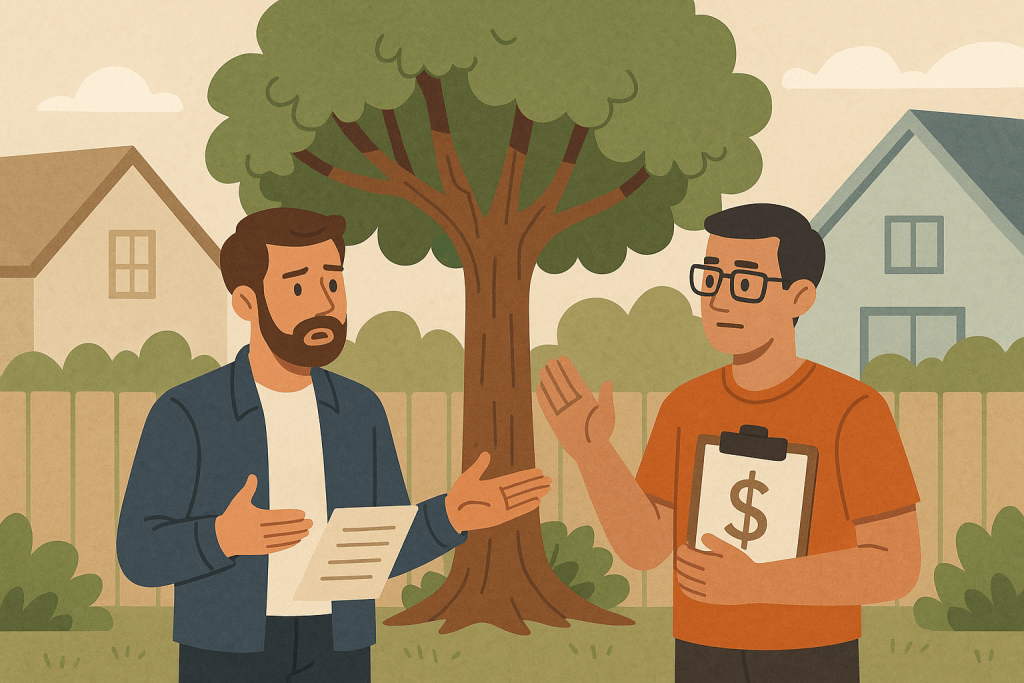
Tree care disagreements rarely come from the work itself. They come from assumptions about ownership, benefit, and impact.
Responsibility is usually based on where the tree sits, who benefits from it, and which property is affected by maintenance or risk. When those factors are clear early, cost decisions stay practical instead of personal.
Not all tree-related expenses should be split. The difference depends on shared benefit and shared risk.
🌳 Usually Shared:
These situations affect both properties or provide value to both neighbors.
• Trees directly on property line
• Large trees affecting both properties
• Trees providing mutual benefits (shade, privacy)
• Emergency tree removal for safety
• Professional tree health assessments
Shared benefit usually means shared responsibility.
👤 Usually Individual:
These situations benefit one property or are a personal choice.
• Trees clearly on one property
• Decorative landscaping trees
• Tree planting for personal preference
• Cleanup of leaves/debris on own property
• Aesthetic pruning for personal preference
Keeping these separate avoids unnecessary conflict.
Tree care costs fall into a few predictable categories. Each one carries different expectations.
Routine care that keeps trees healthy and reduces future risk.
• Professional pruning and trimming
• Disease treatment and pest control
• Fertilization and soil care
• Periodic health inspections
These costs are often shared when the tree benefits both properties.
Urgent work needed after storms or when safety is at risk.
• Storm damage cleanup
• Emergency tree removal
• Hazardous branch removal
• Repairs related to root damage
Emergency costs should be discussed ahead of time whenever possible.
Large decisions that affect both properties long-term.
• Full tree removal
• Root system management
• Tree replacement planning
• Preventive work to avoid property damage
These projects require clear agreement before any work begins.
There is no single rule that fits every situation. Fairness depends on benefit and impact.
🌿 Benefit-Based Splitting
Costs are divided based on how much each neighbor benefits from the tree, such as shade, privacy, or added property value. This works well when benefits are clearly uneven.
⚖️ Equal Splitting
Costs are split 50/50 when both properties benefit equally and are equally affected. This approach keeps things simple and avoids overanalysis.
🏠 Property Impact Splitting
Costs are adjusted based on which property is more affected by roots, falling branches, or structural risk. This makes sense when problems are clearly concentrated on one side.
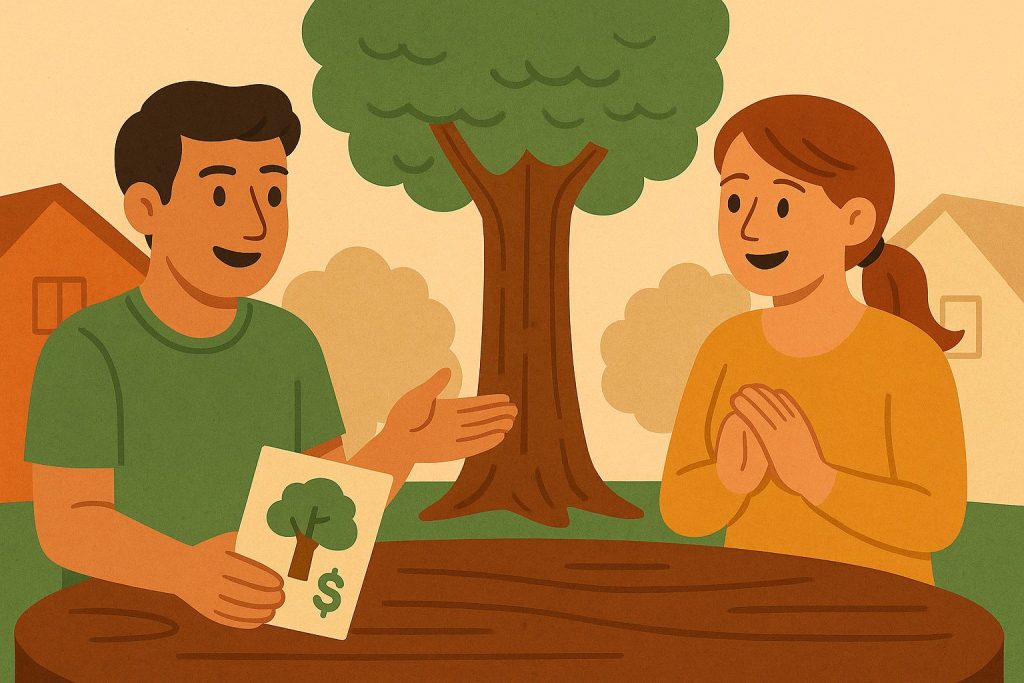
Tree care works best when handled early and calmly. Shared benefit often means shared responsibility, but situations are rarely identical.
Talk before work begins. Agree on how costs are split. Set expectations for regular maintenance and emergencies.
Most neighbor disputes are avoidable. Clear communication keeps trees healthy and relationships respectful.
🌳
Track tree maintenance expenses transparently with Bill Split Pro. Keep your neighborhood beautiful and relationships strong.
