
Money issues rarely start with bad intent. Most conflicts over shared bills come from assumptions, unclear rules, or waiting too long to speak up.
Clear expectations and early agreement remove most friction before it appears. When everyone understands the rules, shared expenses stop feeling personal.
This article explains how shared bill conflicts usually begin and how to prevent them before they damage relationships.
"Most conflicts over shared bills start from unclear expectations. I’ve found that agreeing on the method early and tracking expenses as they happen prevents almost all tension. Clear rules remove emotion from the situation and keep things simple." - Martynas Baniulis

Most disputes do not start with large amounts of money. They start with unclear assumptions. One person expects equal splitting. Another assumes usage matters. No one confirms the rule.
The conflict appears later, usually when someone feels they are paying more than they should. By that point, the issue feels personal instead of practical.
Recognizing this pattern early makes prevention easier.
Every shared expense should follow a known rule. Equal split, income-based, usage-based – it does not matter which. What matters is agreement before money is spent.
• Decide what expenses are shared
• Decide how they are split
• Decide when settlements happen
• Decide who pays upfront
When the rule exists before the bill arrives, arguments rarely follow.
Hidden math creates suspicion. Visible math creates trust.
🔍 Transparency Features to Look For:
• Real-time expense tracking visible to all participants
• Clear breakdown of who paid for what
• Automatic calculation verification
• Settlement plan that everyone can review
• History of all transactions and payments
Using a shared bill split calculator keeps calculations neutral and prevents debates over the numbers.
When everyone sees the same totals, discussions stay factual.
Small frustrations grow when ignored. If something feels uneven, raise it while it is still minor.
💬 Keep It Direct and Neutral:
• “Can we review how we’re splitting this to make sure it feels fair?”
• “I want to make sure everyone is comfortable with our expense system.”
• “Let’s double-check our calculations together.”
• “How is everyone feeling about our current splitting arrangement?”
Short check-ins prevent long-term resentment. Waiting usually makes the conversation harder.
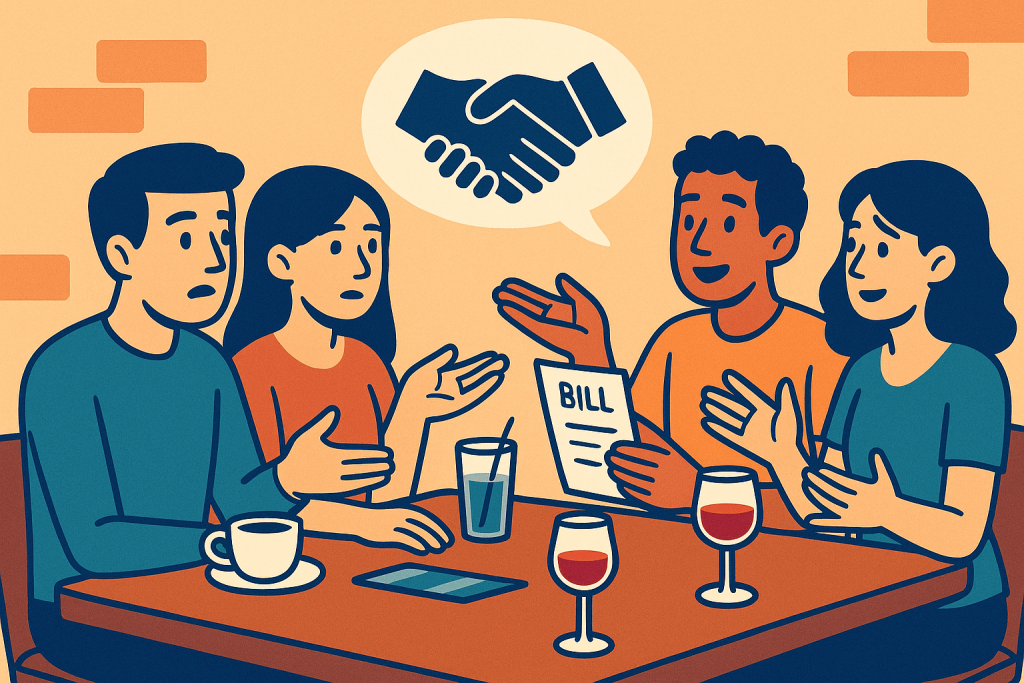
Not everyone has the same financial capacity. Equal amounts can affect people very differently.
💡 Reduce Pressure When Needed:
• Offer different participation levels for expensive activities
• Consider income-based splitting for major expenses
• Allow people to opt out of optional expenses
• Create payment plans for large expenses
Fairness is not always about equal numbers. It is about sustainable contribution.

Avoiding conflict is about structure, not control. Clear rules, early conversations, and fair flexibility keep shared expenses from becoming emotional.
Address concerns early. Respect different financial limits. Keep expectations visible and agreed.
When money rules are clear, relationships stay intact.
🤝
Start with transparent, fair systems using Bill Split Pro. Prevent conflicts before they happen with clear, visible expense tracking.
Conflict-Free & Fair
