

Tipping and bill splitting rules are not universal. What feels polite in one country can feel awkward or even rude in another.
Travel adds pressure to these moments. You are already navigating language, currency, and customs. Unclear payment expectations make group dining harder than it needs to be.
This article explains how different countries handle tipping and bill splitting, so you know what to expect and how to avoid uncomfortable situations abroad.
"Tipping and bill splitting are very culture-dependent. I’ve learned that assuming the same rules everywhere usually leads to awkward moments. When traveling, I focus on how locals handle it and adjust. That small effort avoids confusion and keeps dinners relaxed." - Martynas Baniulis
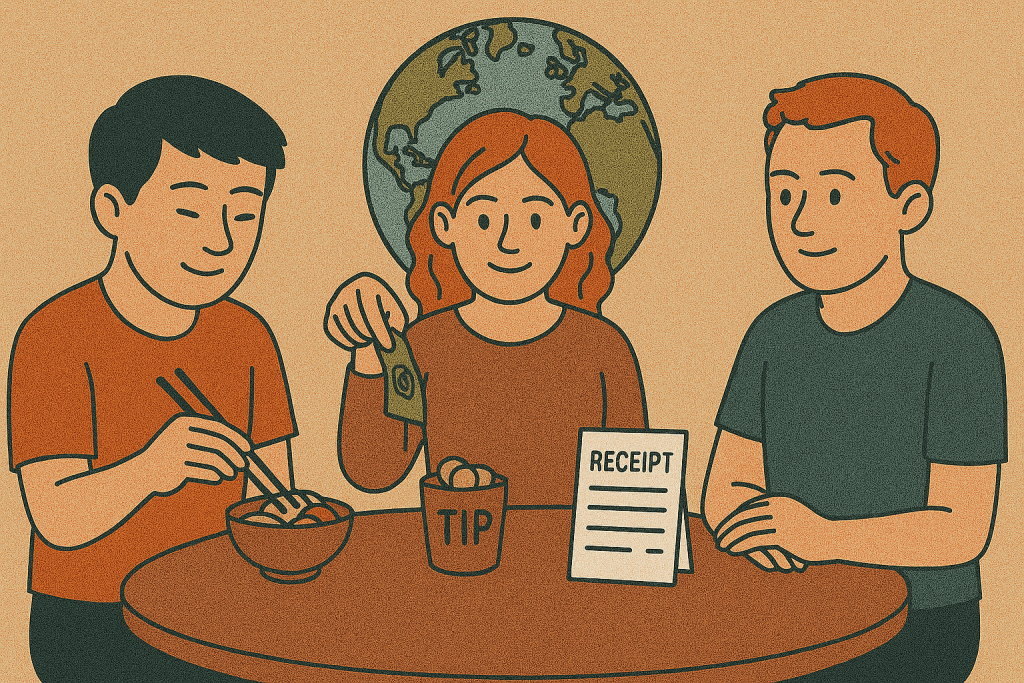
Tipping and bill splitting tend to follow local norms shaped by wages, service culture, and long-standing habits. In some countries, tips are expected and make up a large part of income. In others, service is already included and tipping plays a much smaller role.
Understanding these differences makes it easier to handle the bill without second-guessing or awkward moments while traveling.
🇺🇸 United States
• Standard tip: 18-22% at restaurants
• Bill splitting: Very common, often split equally
• Service charges: Rare except for large groups
• Cultural note: Tipping is expected and significant part of server income
🇨🇦 Canada
• Standard tip: 15-20% at restaurants
• Bill splitting: Common and socially accepted
• Service charges: Uncommon
• Cultural note: Similar to US but slightly lower tip expectations
🇬🇧 United Kingdom
• Standard tip: 10-15% if no service charge
• Service charges: Common (12.5-15%)
• Bill splitting: “Going Dutch” is normal
• Cultural note: Check for service charge before tipping
🇫🇷 France
• Standard tip: 5-10% or round up
• Service charges: Service compris (included)
• Bill splitting: Less common, often one person pays
• Cultural note: Service is included in prices
🇩🇪 Germany
• Standard tip: 5-10% or round to nearest Euro
• Bill splitting: Very common (“getrennte Rechnung”)
• Service charges: Rare
• Cultural note: Splitting bills is completely normal
🇯🇵 Japan
• Tipping: Not expected and can be offensive
• Bill splitting: Common among friends
• Service charges: Rare
• Cultural note: Excellent service is standard, not tip-worthy
🇰🇷 South Korea
• Tipping: Not customary
• Bill splitting: Very common (“더치페이”)
• Service charges: Sometimes in upscale places
• Cultural note: Age hierarchy may affect who pays
 Australia & New Zealand
• Tipping: 10-15% for exceptional service only
• Bill splitting: Very common and expected
• Service charges: Rare
• Cultural note: Staff earn living wages, tipping is bonus
When traveling, differences in tipping and bill payment customs become more noticeable. What feels normal at home may not apply elsewhere, and assumptions can create awkward moments when the bill arrives.
🌍 To avoid confusion, a few simple habits help:
• Check local tipping customs before dining out
• Pay attention to whether service is already included
• Ask hotel staff or locals when unsure
• Watch how nearby tables handle tipping and payment
• Use tools that support local currencies when splitting expenses
These small checks make it easier to handle the bill confidently, even in unfamiliar settings.
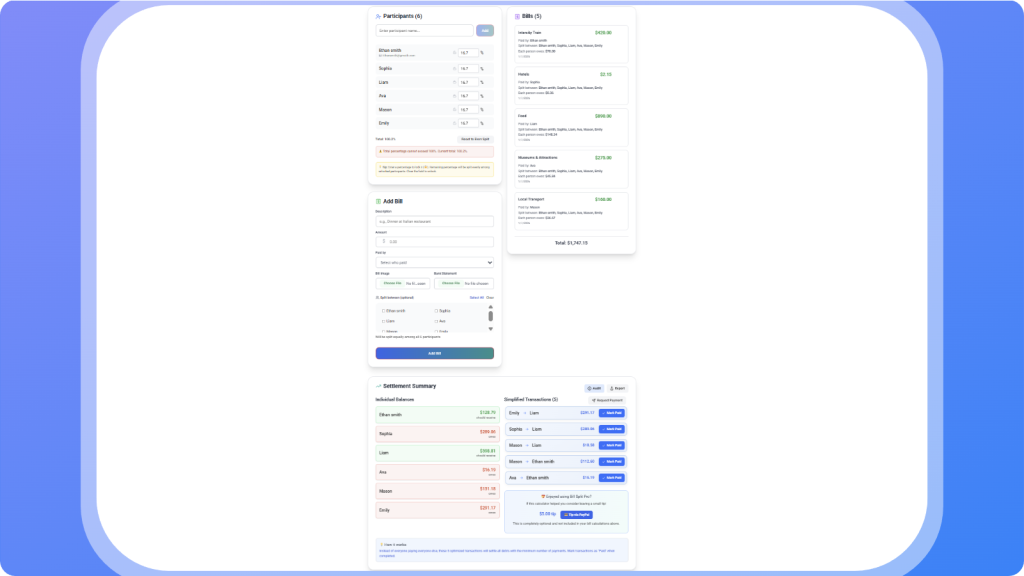
Even though tipping customs vary by country, splitting shared expenses usually follows the same basic principles everywhere. People still want clarity, fairness, and a simple way to track who paid and who owes what.
When traveling with friends, tools like Bill Split Pro help keep things organized across currencies and group sizes. Everyone sees the same totals, which reduces confusion when local customs differ.
Clear tracking matters even more abroad, where unfamiliar rules can make payment moments feel uncomfortable.
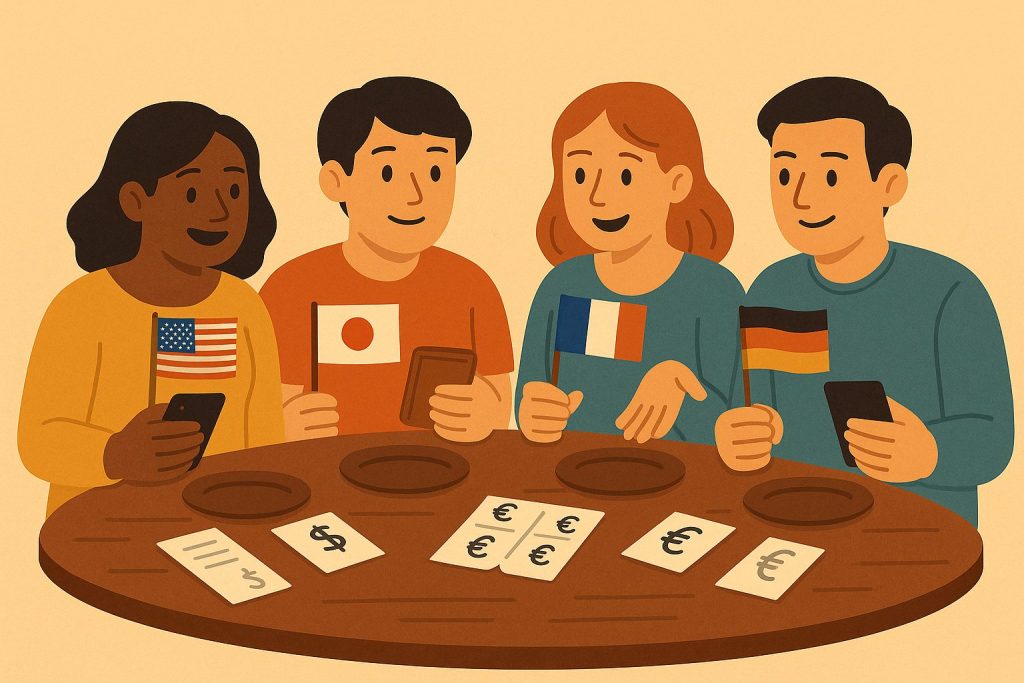
Tipping norms vary widely, but confusion usually comes from assuming one system applies everywhere. Paying attention to local customs avoids overpaying, underpaying, or offending service staff.
Bill splitting tends to be more consistent globally, but who pays and how often can still depend on culture, age, or setting.
A little awareness goes a long way. When expectations are clear, international dining stays focused on the experience, not the bill.
🌍
Handle international dining expenses with Bill Split Pro. Multi-currency support for global group dining experiences.
