

Splitting bills rarely fails because of bad intentions. It fails because small issues are ignored until they pile up.
Missed expenses, uneven participation, and delayed payments create frustration fast. Knowing these problems in advance makes them easier to prevent.
This article breaks down the most common bill-splitting problems and how to handle them before they turn into conflict.
"When I suggest tracking expenses together in one place, some people hesitate. They ask why it’s needed or don’t want to sign up for anything. This is a problem I face often. It takes a bit of explaining. After they try it once, they usually see why it helps and are glad we used it." - Martynas Baniulis
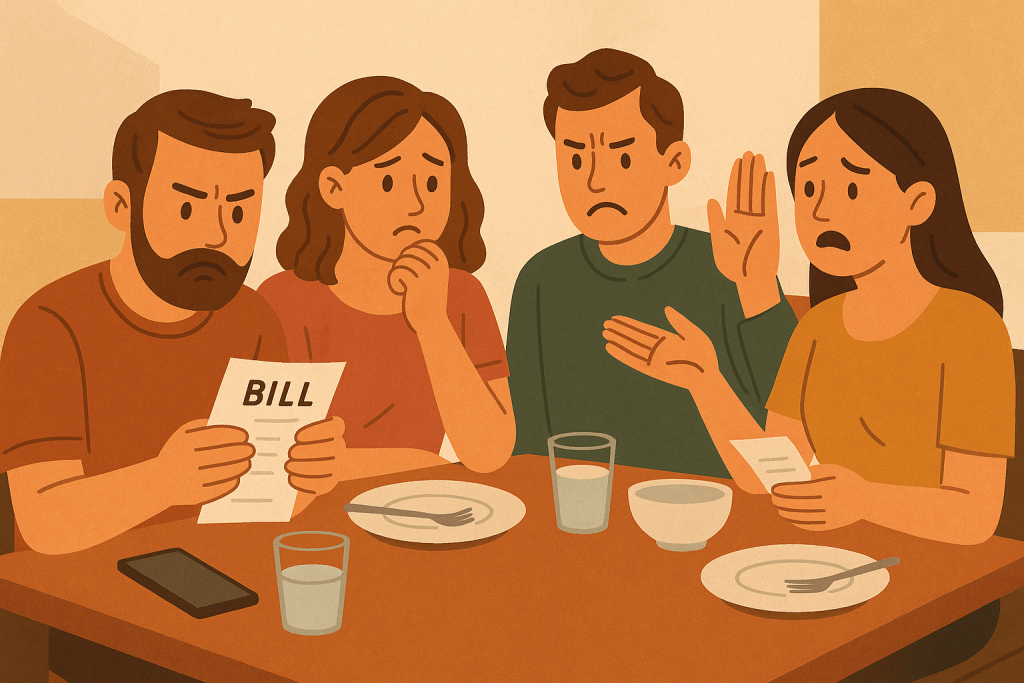
Most issues don’t start with one big mistake. They come from small gaps in tracking, assumptions, or timing. These are the problems that show up most often when people split expenses.
Small purchases that don’t get tracked add up quickly. Coffee runs, parking fees, tips, and incidental costs often get overlooked, leading to incomplete expense tracking.
Why This Happens:
• People think small amounts “don’t matter”
• No system for tracking minor expenses
• Assumption that someone else will handle it
• Forgetting to log expenses immediately
💡 Solution:
Track everything, no matter how small. Use a tool that makes it easy to log expenses immediately. Set a rule that all shared expenses get recorded, even $5 coffee runs.
Why This Happens:
• Different comfort levels with spending
• Lack of upfront spending agreements
• Assumption that “it all evens out”
• Avoiding difficult conversations about money
💡 Solution:
Set spending expectations upfront. For restaurants, agree on a price range. For trips, establish a budget. Consider splitting individual items separately from shared costs.
Manual calculations lead to errors, especially with tips, taxes, and multiple bills. Different people get different results, causing confusion and disputes.
Why This Happens:
• Manual math across multiple bills
• Tips and taxes added inconsistently
• Different people calculating separately
💡 Solution:
Use a reliable calculation tool that everyone can see and verify. Digital tools eliminate math errors and provide transparency that builds trust.
💡 Solution:
Set clear payment timelines and stick to them. For larger expenses, collect money upfront or use instant digital payments to avoid delays.
Not everyone participates in every activity or consumes every shared item, but the default assumption is often equal splitting.
💡 Solution:
Create separate expense entries for different activities. Only include participants who actually benefited from or chose to participate in each expense.
💡 Solution:
Use browser-based tools like Bill Split Pro that work instantly without downloads or sign-ups. One shared link lets everyone view and update expenses from any device.
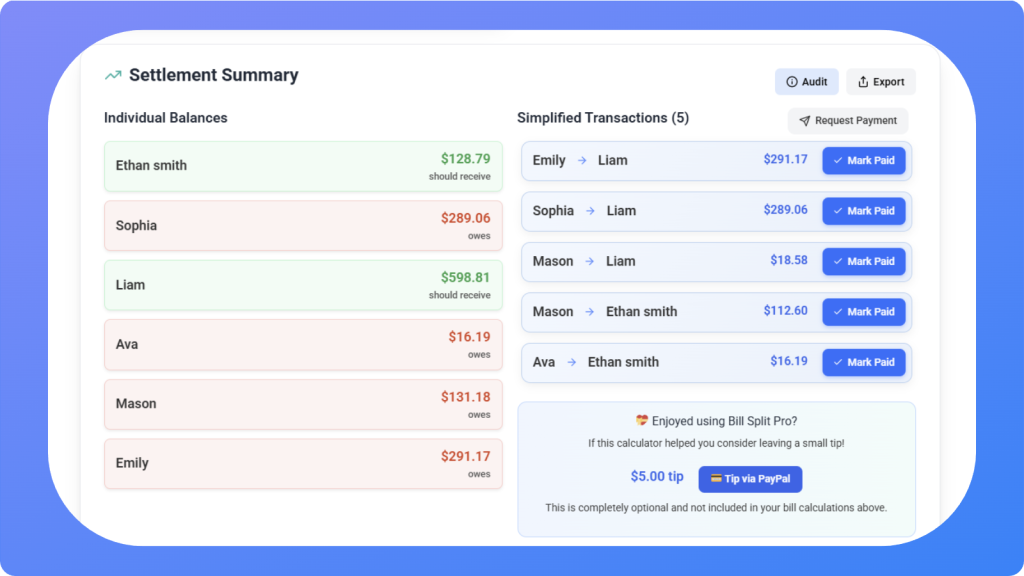
Most bill-splitting issues start before the first expense is added. The easiest way to avoid them is to remove guessing early.
Agree on what will be shared and what will not. Decide how optional expenses are handled before money is spent.
Track expenses as they happen. Small amounts are the ones most often forgotten and the ones that cause frustration later.
Use one shared place to track everything. A bill split calculator keeps expenses, participants, and balances visible to everyone, without reminders or follow-ups.

Most bill-splitting problems follow the same pattern. Assumptions replace agreements, and silence replaces clarity.
Set expectations early. Match the splitting method to the situation. Address small issues before they grow.
Clear rules turn shared expenses into routine tasks instead of repeated arguments.
🛠️
Avoid these common pitfalls with Bill Split Pro. Transparent calculations, real-time tracking, and fair settlement optimization.
